
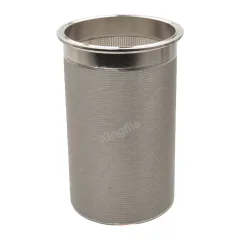
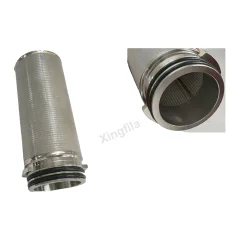
Bonded mesh. Accessible connection. Serviceable construction.
Clamp-end Sintered Mesh Elements
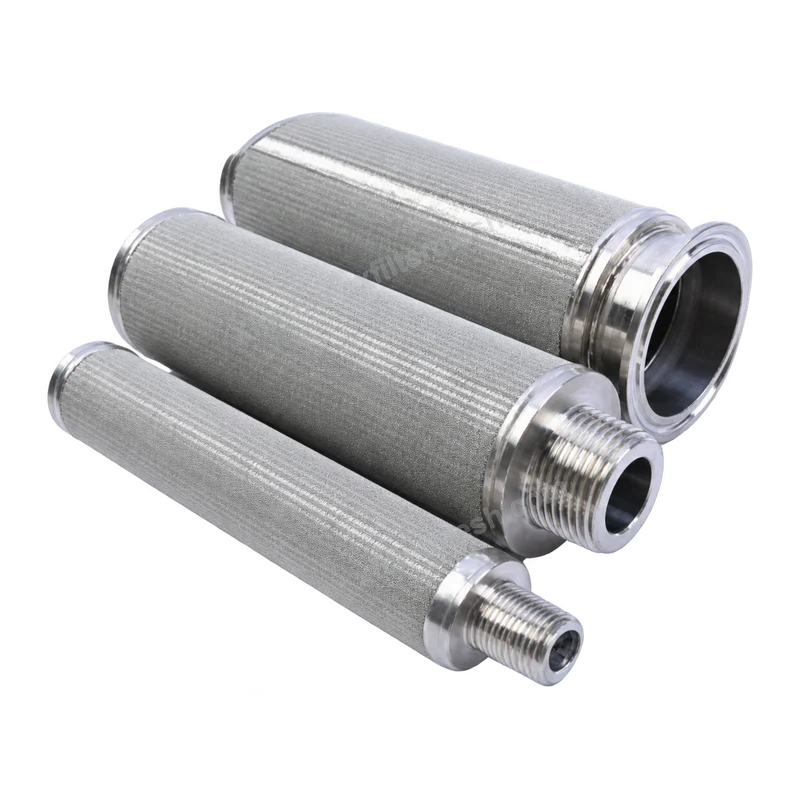
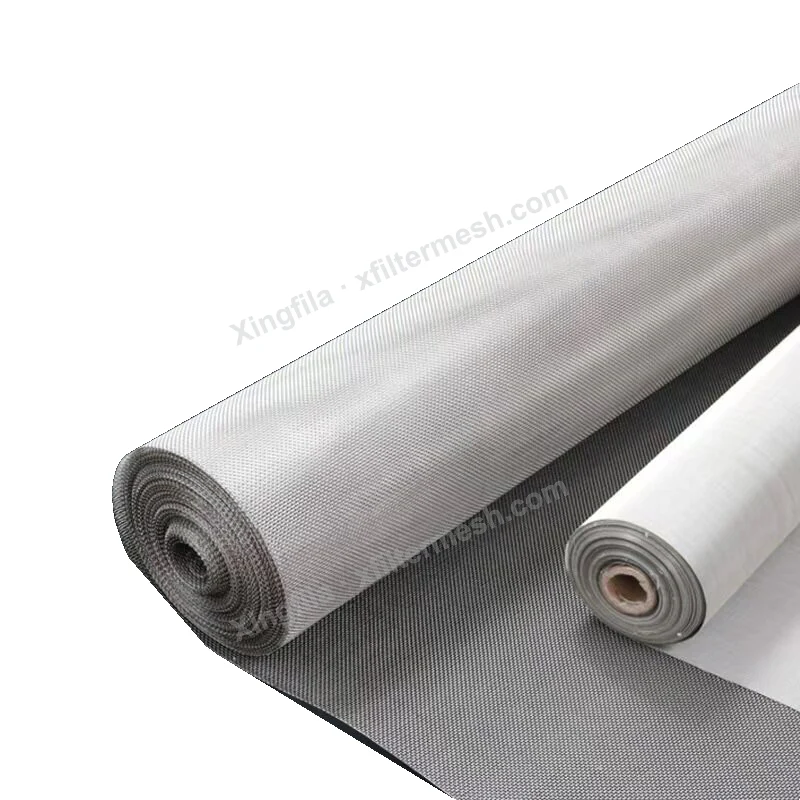
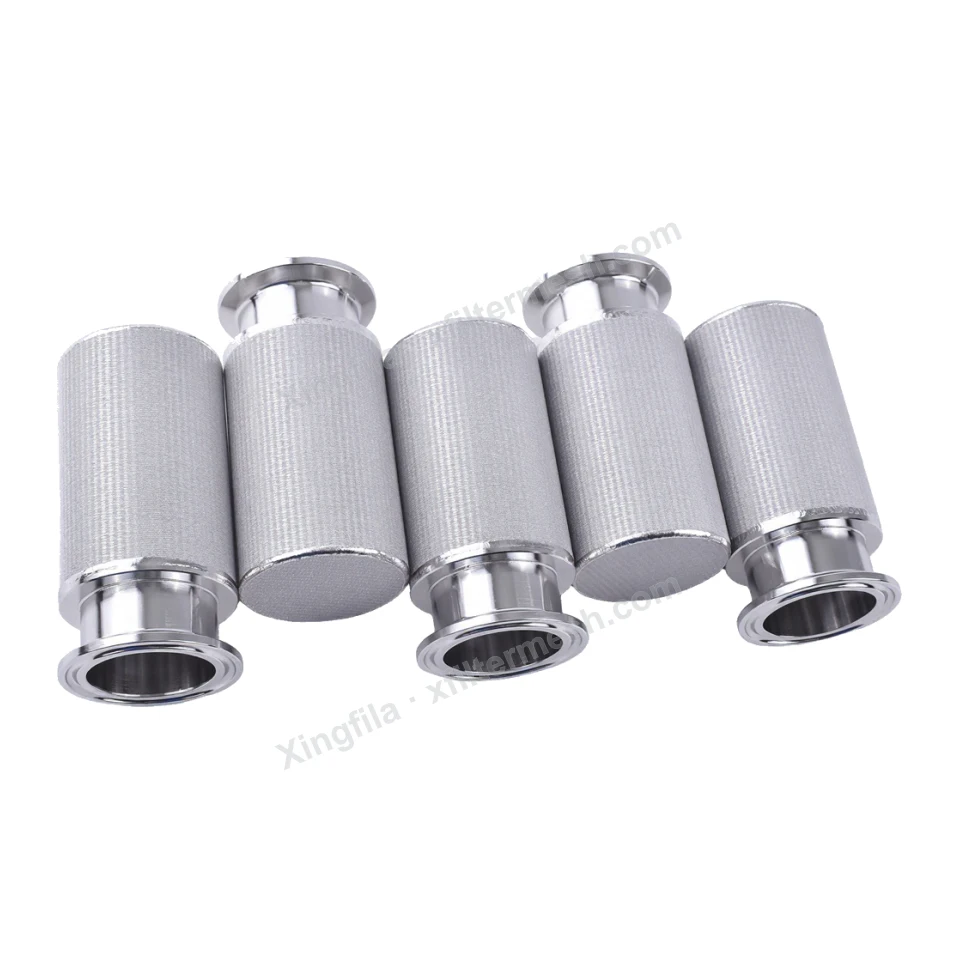
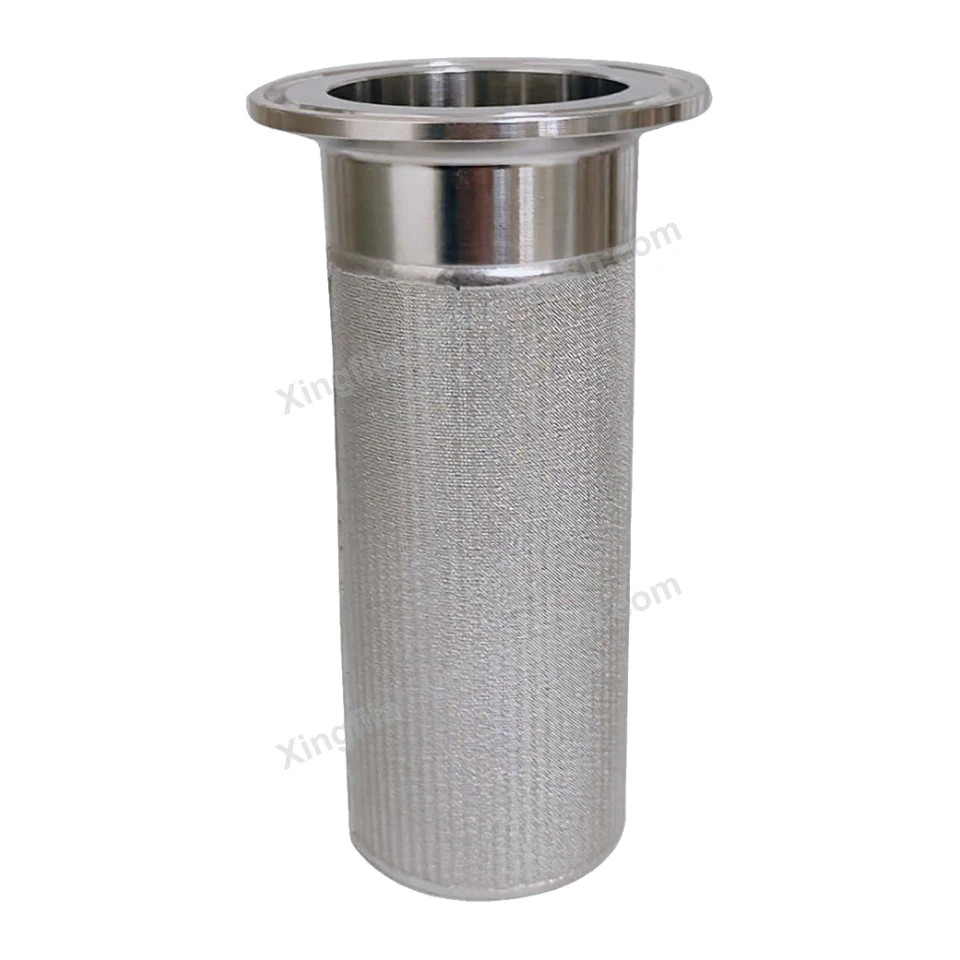
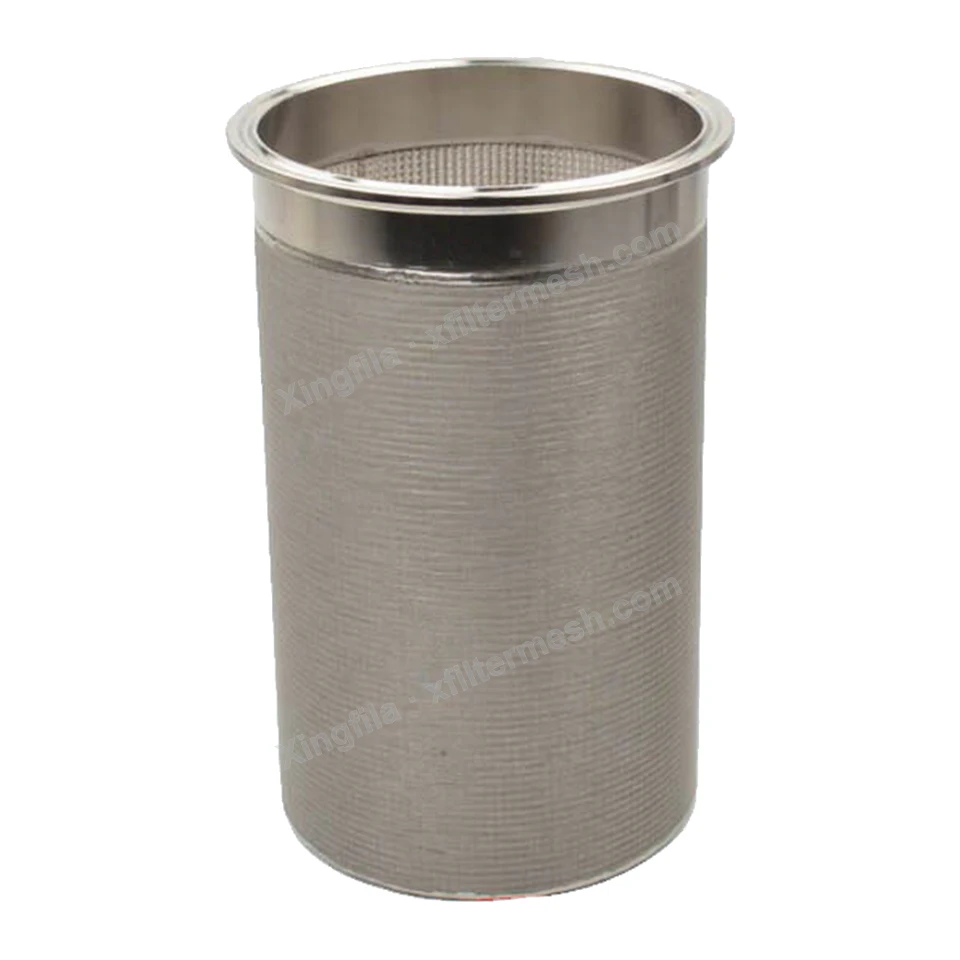
Bonded multilayer wire mesh forms a rigid filtering wall for particle retention. A clamp-end connection makes the element accessible for removal, inspection and cleaning, bringing filtration and service access together in one cylindrical component.
- Bonded mesh layers
- Accessible clamp connection
- A cleanable metal filtering surface
PRODUCT CONSTRUCTION
Multilayer Sintered Mesh Construction
Bonded mesh layers combine support, flow distribution and particle retention in a stable, cleanable structure.
TYPICAL 5-LAYER MEDIUM · FUNCTIONAL VIEW
Functional sequence from a published five-layer medium; actual layer count and weave depend on configuration. Media construction reference ↗
Bonded for stability
Sintering fixes the layers together, limiting movement between loose screens.
Clamp access for servicing
Remove the element to inspect the filtering surface and seal.
Cleanable metal surface
Match the cleaning method to the deposits and element construction for reuse.
Product forms & connections
Compare clamp, flange and open-cylinder forms for your installation.
TECHNICAL INFORMATION
Select a Filter for Your Process
Start with the medium, temperature and cleaning method. Then choose the material, filtration rating and connection.
| Selection item | 304 | 316L |
|---|---|---|
| Grade designation | EN 1.4301 / UNS S30400 | EN 1.4404 / UNS S31603 |
| Typical composition | Cr-Ni austenitic stainless steel. Typical chemistry: Cr 18.1%, Ni 8.1%. | Low-carbon Cr-Ni-Mo austenitic stainless steel. Typical chemistry: Mo 2.1%, C 0.02%. |
| Selection considerations | General filter components in milder corrosive conditions. An option for food-processing equipment. | For increased corrosion demands and resistance to intergranular corrosion after welding. An option for food, pharmaceutical and chemical equipment. |
| Conditions to check | Chloride-bearing media can cause pitting or crevice corrosion. Assess cleaning-agent chemistry, concentration, temperature and contact time. | Assess corrosion risk in chloride-bearing conditions. For CIP or sterilisation, also check the medium, temperature, duration and seal compatibility. |
Use these typical alloy values as a selection reference. Match the complete configuration to the medium, cleaning conditions and installation.
Scope and reference sources
Typical alloy compositions from Outokumpu are provided for grade comparison. Use the specified grade standard and batch material documentation for acceptance, and select mesh, end fittings and seals for the actual medium and cleaning conditions. Assess 316L corrosion suitability for the application. 304 reference ↗ · 316L reference ↗ Corrosion selection reference ↗
| Example nominal grade | Equivalent length in mm |
|---|---|
| 5 μm | 0.005 mm |
| 10 μm | 0.010 mm |
| 20 μm | 0.020 mm |
| 40 μm | 0.040 mm |
| 100 μm | 0.100 mm |
Published sintered-mesh grade examples for selection reference; specify the rating for each selected element.
Scope and reference sources
The table shows grade examples from published sintered-mesh media data. For the selected element, specify the nominal or absolute rating, test method and target particles; use the stated removal efficiency when comparing performance. Grade reference ↗
| Catalogue size (mm) | Tube OD / ID (mm) | Ferrule OD A (mm) |
|---|---|---|
| 25.00 | 25.60 / 22.60 | 50.50 |
| 38.00 | 38.60 / 35.60 | 50.50 |
| 51.00 | 51.60 / 48.60 | 64.00 |
Alfa Laval ferrule-dimension examples for connection selection; use the selected filter drawing for its actual dimensions.
Scope and reference sources
These three Alfa Laval catalog examples illustrate ferrule diameter and tube bore. Check both dimensions: a 50.50 mm ferrule can have different bores. Select KF vacuum connections using their own interface specification, and match the filter dimensions to its drawing. Ferrule dimensional reference ↗
MEDIA COMPARISON
Compare Filter Media
Compare construction, typical duties and maintenance trade-offs.
| Filter type | Construction | Typical duties | Trade-offs |
|---|---|---|---|
| Single-layer woven mesh | One woven screen | Sieving, prefiltration and particle retention | Fine screens or higher differential pressures need support; rating depends on weave and opening. |
| Multilayer sintered mesh | Bonded mesh layers | Powder venting, gas/liquid duties and cleanable elements | Assess flow resistance against grade, layer arrangement and effective area. |
| Sintered metal-fibre felt | A sintered three-dimensional fibre network | High dirt-loading duties and liquid depth filtration | Deposits within the medium require a suitable cleaning process. |
| Pleated metal element | Pleated mesh or fibre media | More filtering area in a limited envelope | Assess pleat deposits and cleaning for sticky or caking powders. |
Compare media construction and forming method separately: sintered mesh or fibre felt can be combined with a suitable element geometry. Use this table as a qualitative design guide; compare measured performance using matched specifications and test conditions. Mesh reference ↗ · Metal-fibre reference ↗
APPLICATIONS
Typical Applications
Start with your equipment, medium and filtration task.
Powder silo and loader vent filters
Retain powder while allowing gas flow at silo vents and matched vacuum-loader filter positions. Match particle size, airflow and cleaning.
Vacuum and inert-gas line filters
Capture particles inside a matched housing in vacuum or inert-gas lines such as nitrogen. Check gas flow, allowable differential pressure and connection.
Process-fluid particle filtration
Capture solids in process-line or reactor-associated filter assemblies. Select for viscosity, temperature, solids loading and cleaning.
Match the element to the equipment assembly; combustible dust is addressed at system level.
TECHNICAL QUESTIONS
Selection questions, answered
Bonded mesh. Accessible connection. Serviceable construction.
How should I choose 304 or 316L for chlorides?
Molybdenum in 316L improves corrosion resistance, but does not make it suitable for every chloride duty. Specify chloride concentration, temperature, pH and exposure time before selecting the alloy.
Can the element be cleaned in place (CIP)?
Suitability depends on cleaning chemistry, concentration, temperature, duration, and compatibility of the element and seals. Inspect the surface and connections and validate cleaning effectiveness.
How does operating pressure differ from differential pressure?
Operating pressure concerns the equipment pressure boundary. Differential pressure is the pressure difference across the element. Specify operating pressure and allowable filtration and reverse-flow differential pressures separately.
How often should the element be cleaned?
Use pressure-drop and flow trends with the equipment maintenance requirements. Record the initial pressure drop and its recovery after cleaning; one fixed interval does not suit every duty.
LET’S DEFINE YOUR REQUIREMENT
Let’s specify your product.
Share the medium, temperature, cleaning method and installation dimensions. For a sample request, include the quantity and test conditions in your requirements.
Start Your Selection
Choose a reference image, then add your requirements. The product and selected image stay in your inquiry.
RELATED CONSTRUCTIONS
Compare related products.
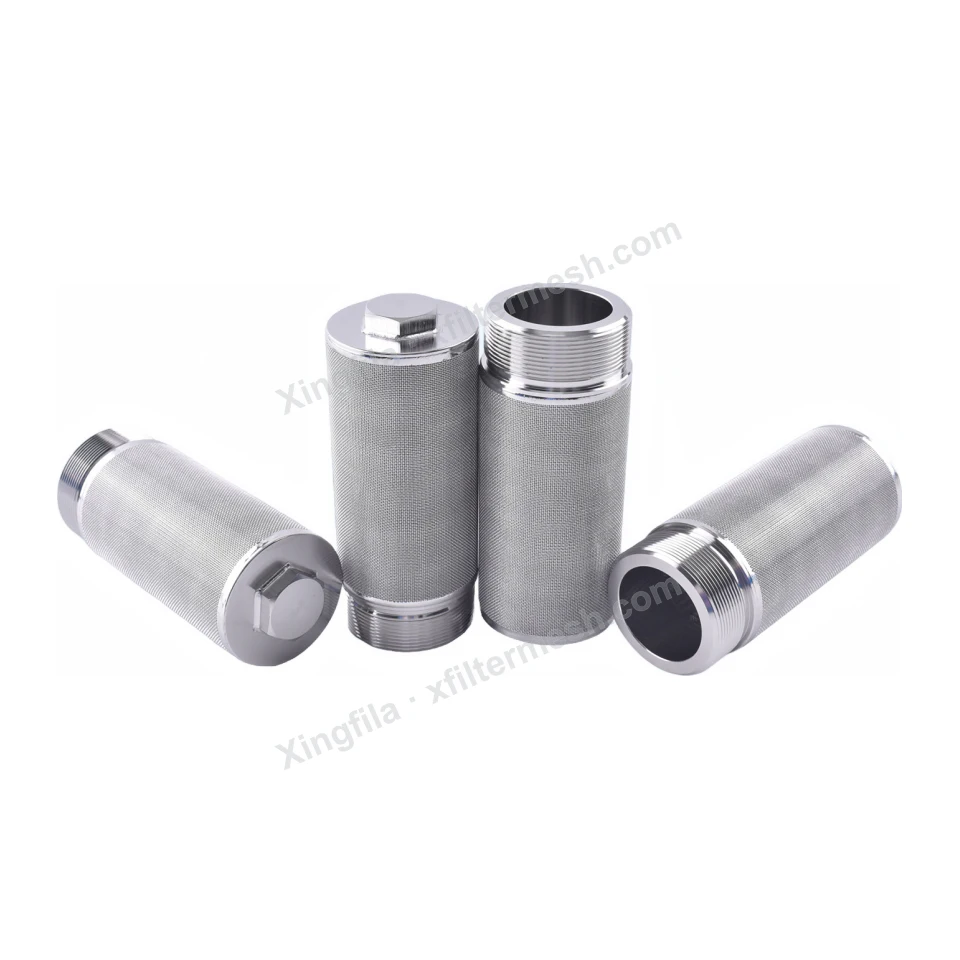
Threaded Sintered Mesh Elements
View construction and selection details.
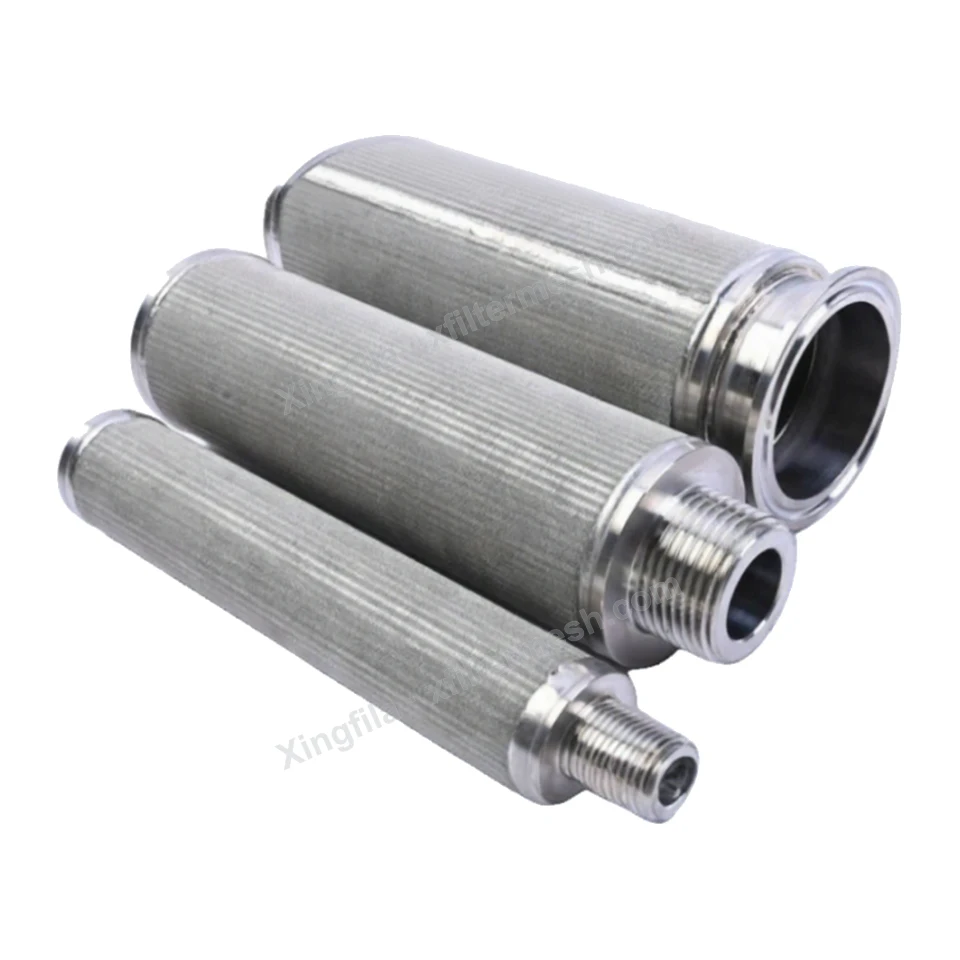
Sintered Mesh Element Styles
View construction and selection details.
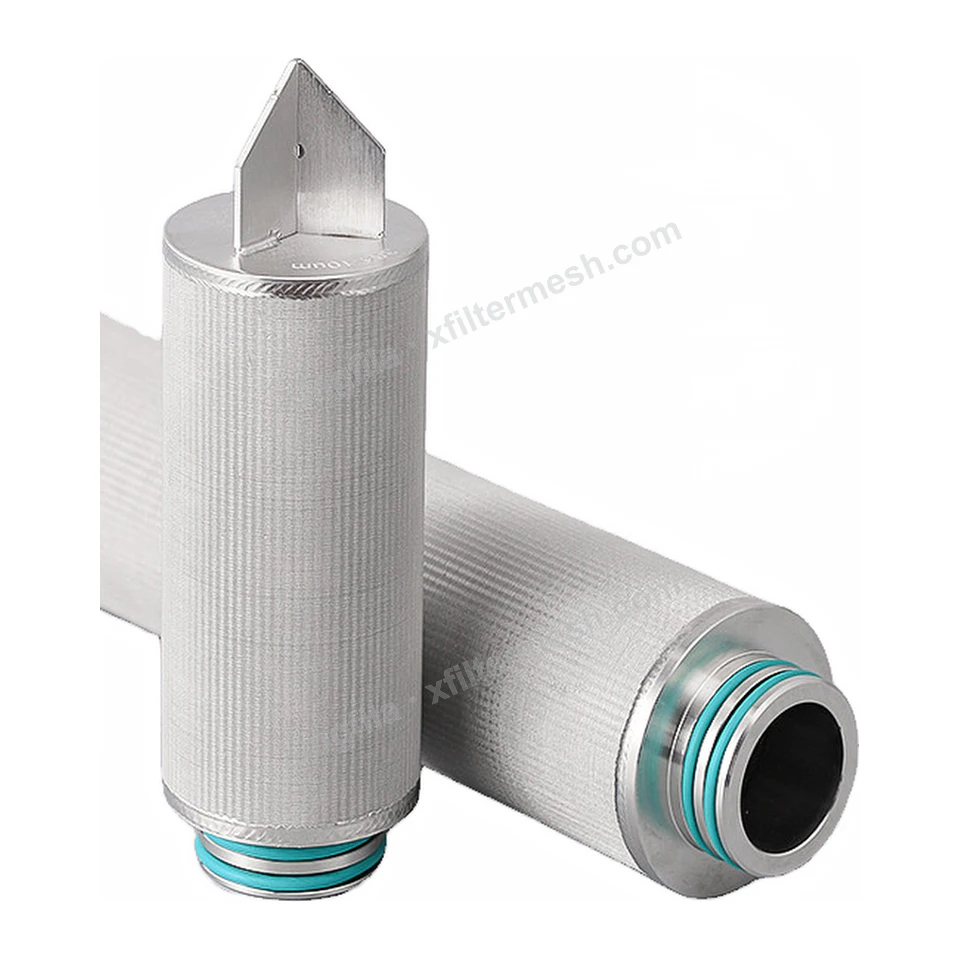
Sintered Mesh Gas-filter Elements
View construction and selection details.